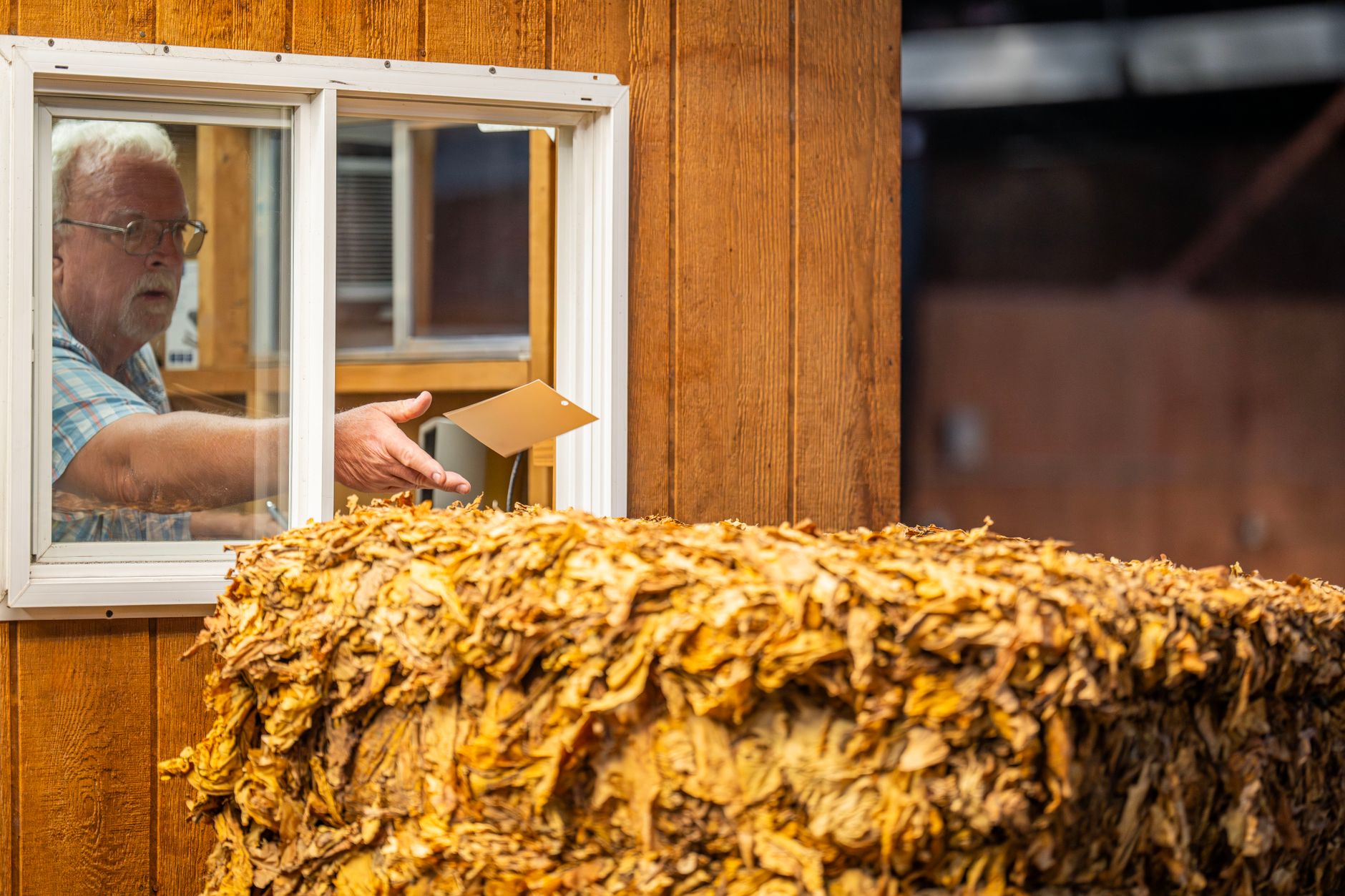
Springfield is not a generic small town — it is the capital of dark-fired tobacco, a product cured by smouldering hardwood fires inside barns for weeks. From late August, you will see the leaves going in; from mid-September through October, the low blue smoke drifting across Highway 41 north of town is the barns being fired. It smells like a campfire that has been going for a month, because it has. Nowhere else in the country does this at this scale, and no other season shows you what Robertson County actually is.
If you have any interest in agriculture, whisky (the leaf ends up in premium cigars and, indirectly, in the smoke profiles that shaped Tennessee curing traditions), or landscape photography, come in these six weeks. Miss it and you get a pretty but generic middle-Tennessee farm county. Hit it and you understand why the courthouse square has a bronze tobacco worker out front.
Cutting starts in the last week of August and runs through mid-September, weather depending. Crews move down the rows with tomahawk-shaped knives, spearing five or six plants onto a wooden stick. The sticks go on wagons, then up into the rafters of the barns. Drive Highway 431 toward Adams or Highway 49 toward Orlinda in the first three weeks of September and you will see this happening in real fields, not a museum recreation.
Firing begins once the leaves have yellowed, usually the third week of September, and runs four to six weeks. Sawdust and slabs of hickory and oak smoulder on the barn floors. The barns are closed but not sealed, and blue smoke leaks through every seam. Best viewing is dawn and dusk when the light is low and the smoke settles in the hollows. October afternoons on the back roads near Cedar Hill and Adams are unforgettable.
Harvest is not a tourist season locally, which is good news for you. The Hampton Inn on Memorial Boulevard runs $118-138 in September, dropping slightly in mid-October before the Nashville leaf-peeper spillover pushes it back up. The Holiday Inn Express on Tom Austin Highway sits around $125-145. Both include breakfast, both have parking, both are ten minutes from the working barns north of town.
If you want character, drive fifteen minutes to Adams and look at the handful of farm-stay rentals on the back roads — expect $140-170 a night for a two-bedroom farmhouse, most listed on Airbnb rather than the chains. Avoid the very cheap motels on Memorial Boulevard south of the bypass; they are booked with contract workers during harvest and the parking lots are full of pickups from 4am. Book two to three weeks out and you will have no trouble.
The fair runs the last week of August at the fairgrounds on Highway 41, and it is the traditional start of the harvest social calendar. Admission is around $10, parking is free, and the tobacco exhibits in the agricultural building are the real reason to go — hands of cured leaf judged by growers who have been doing this for forty years. The demolition derby on the Saturday night draws every farmer in the county because after that, nobody has a free evening until November.
Go on a weekday evening if you hate crowds; Thursday is the sweet spot. Eat before you arrive or commit to a Polish sausage and funnel cake, because the fair food is exactly what fair food is. The livestock barns close at 9pm, so aim to be there by 6pm if you want to see the animals as well as the rides. It is not sophisticated. It is the point.
September in Springfield averages highs of 82°F and lows of 60°F, with humidity dropping noticeably from the August misery. October averages 72°F and 48°F, and the first frost usually hits between October 20 and November 5. Rain is possible but not persistent — you get afternoon thunderstorms rather than the drizzly overcast you would find further north. Golden hour in late September runs 6:15-6:45pm, which is exactly when the smoke is thickest.
Wear closed shoes and long trousers if you plan to walk near any barn — the fields are stubble and the barn edges have loose sawdust and nails. A light jacket for October evenings, sunglasses always. If you have asthma, the smoke is not aggressive but it is real; do not stand downwind of a firing barn for an hour. Bring a proper camera. Phone cameras handle the smoke badly because the auto-exposure keeps trying to fix what you want.
The Robertson County Historical Society Museum on 5th Avenue is open Tuesday through Saturday 10am-4pm year-round and runs a small tobacco-history exhibit that is worth thirty minutes before you drive out to see the real thing. The Bell Witch Cave in Adams is open weekends through October and closes for winter on November 1 — combine it with a Highway 41 barn drive. Downtown restaurants keep normal hours; Springfield does not shut down for harvest the way tourist towns shut down after Labour Day.
What is genuinely closed: farm tours as an organised product. There is no visitor centre for tobacco. You are welcome to look from the road, you are welcome to stop and chat with farmers who are not busy, and you are absolutely not welcome to walk into a barn uninvited — the fires are live and the operations are insured accordingly. If you want inside a barn, ask at the Historical Society; they can sometimes connect visitors with growers happy to host.
Arrive Friday afternoon, check in, and drive the loop from Springfield up Highway 431 to Adams, across on Highway 41 to Cedar Hill, and back down through the county roads before sunset. Do not plan stops — you will make them naturally when you see something. Dinner at 107 Taphouse on the square, then walk it off. Saturday morning, hit the farmers' market on 5th Avenue from 8-11am for late tomatoes and sorghum, then the museum.
Saturday afternoon is for the fair if your dates line up, or for the drive to Bell Witch Cave and back through Orlinda if they do not. Sunday morning is the best light of the whole trip — leave the hotel at 6:30am, drive north until you find smoke, park somewhere safe, and just watch for an hour. Breakfast at Southern Hands on the square when they open at 7am. Home by lunch, and you will have seen something almost no visitor to Nashville ever sees.
You can see the barns firing from any public road, and the smoke plumes are visible for miles. What you cannot do is walk inside a working firing barn without an invitation from the grower — the fires are live and insurance forbids it. The Historical Society can sometimes arrange visits with two weeks' notice.
For a healthy adult spending a weekend driving country roads and stopping occasionally, no. The smoke is hardwood, not chemical, and it disperses quickly outdoors. If you have significant asthma or COPD, avoid standing downwind of an active barn, and keep car windows up when passing close. Nobody local wears masks.
Stop on the shoulder, do not block field access gates, and do not cross fences. Farmers here are used to occasional photographers and are generally friendly if you wave. If someone is working at a barn, ask before shooting people. Nobody minds pictures of barns, smoke or fields from the road.
Spring is prettier in a conventional sense — dogwoods, redbuds, mild weather — but you could see the same thing in any Southern county. Harvest is the specific thing Robertson County does that nowhere else does at this scale. If you have one trip, come in late September.
Every booking through Springfield Destinations funds one verified tonne of carbon removal — same room, same price, no markup.
Find a stay