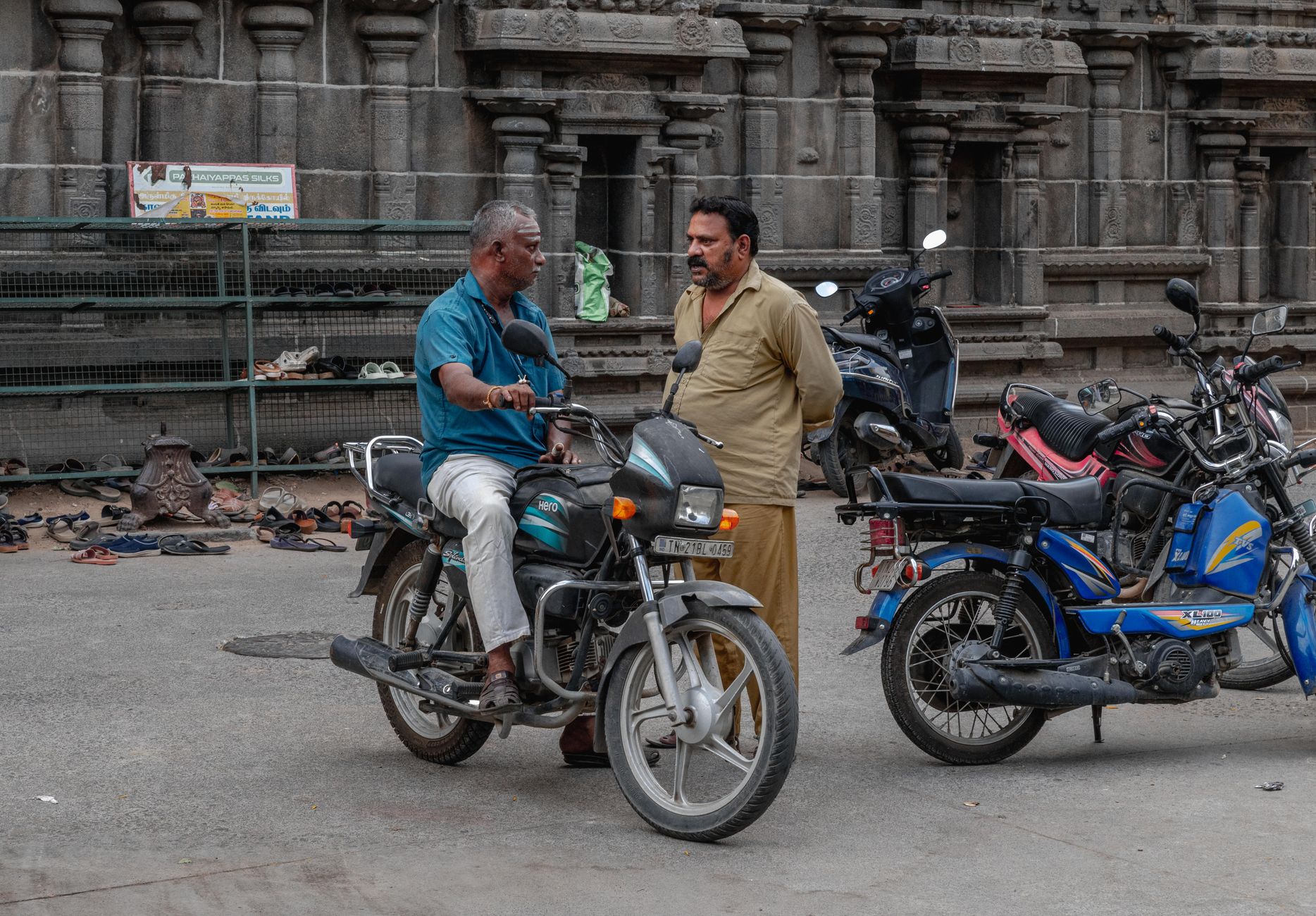
Robertson County has a real Tennessee accent, softer than deep South drawls but distinct from Nashville's more urban patterns. Visitors from other English-speaking countries occasionally struggle for the first day, particularly with speed and vowel shifts on words like "pen" and "pin" which sound identical here. By the second day, most ears adjust. If you miss something, asking someone to repeat is polite and normal; locals do not take offense, and they will slow down.
For non-native English speakers, the Springfield accent is actually easier than a lot of American regional accents because the pace is slower and enunciation is deliberate. Fast-food drive-throughs are the exception; the intercom compression plus the speed makes them hard for anyone. If you struggle at a drive-through, park and go inside. Sit-down restaurants, hotels, and shops all default to a slower conversational tempo that gives you time to process and respond.
Springfield has a meaningful Hispanic community and Spanish is the second most common language in Robertson County, especially in the agricultural sector and in specific neighborhoods. Several restaurants around 11th Avenue and Memorial Boulevard operate primarily in Spanish and serve genuine Mexican food that outshines the Tex-Mex chains. Basic English is spoken at every business a visitor would use, but if you speak Spanish, you will find plenty of daily-use opportunities.
Beyond English and Spanish, language options are limited. There is no meaningful French, German, Japanese, or Chinese speaking community serving visitors, and translation apps are your fallback for anything specialized. Hotel front desks at the Memorial Boulevard properties handle a wide range of accents and languages with patience. If you are a non-English speaker planning a trip, staying at a chain hotel is easier than a bed-and-breakfast where the host may only speak English.
A few local usages will confuse you if you do not know them. "Coke" often means any soft drink, not specifically Coca-Cola; a server asking what kind of coke you want is asking for your soda choice. "Fixing to" means about to, as in fixing to leave. "Y’all" is genuinely singular or plural depending on context and is not slang, it is standard local grammar. "Sir" and "ma’am" from servers and store clerks are politeness markers, not condescension, and are used regardless of your age.
Directions come with landmarks rather than street names: "go down past the old Piggly Wiggly and turn where the water tower used to be" is a real Springfield direction. If someone gives you directions this way and you do not know the landmarks, ask for cross streets and they will translate. "Down the road" can mean anywhere from a block to twenty miles depending on tone, so ask for a rough time estimate: "about how long a drive?" gets you a number.
Transactions in Springfield take longer than in a city because small talk is not optional. A hardware-store checkout will include a comment on the weather, a question about where you are from, and possibly a story. The correct response is to engage, briefly, not to speed the transaction. Trying to keep it purely functional reads as rude and actually slows things down because the clerk will still say their piece, just to a colder audience.
Two minutes of pleasant exchange is the norm; five is common. If you are in a hurry, the polite move is to signal it explicitly: "I’ve got to run, but nice talking to you." That is respected and the transaction speeds up. Silent efficiency is not respected. This applies at gas stations, coffee counters, hotel check-ins, and every restaurant. Once you internalize the rhythm, the town runs on it and every interaction becomes friendlier.
Expect three questions in any conversation of longer than two minutes: where are you from, what brings you to Springfield, and how are you enjoying it so far. These are not surveillance, they are the standard opener sequence, and honest short answers work best. "From Chicago, here for a long weekend, enjoying the barbecue" is a complete answer that lets the conversation move forward or wind down naturally.
Follow-up questions may cover family, work, or your route to town. Vague answers are respected; detailed ones are also welcome. Locals will often share the equivalent details about themselves unprompted, which is the reciprocal gesture. This is the pattern that turns a five-minute checkout into a small friendship that lasts the trip. Visitors who deflect all questions are treated politely but distantly, which is fine if that is what you want, but you miss most of what makes Springfield different from a chain-store town.
Handwritten signs are everywhere in Springfield: "back in 20" on a shop door, "cash only today" at a counter, "closed for family" at a restaurant. Take them literally and respect them. "Back in 20" means come back in 20 minutes, not knock on the door. "Closed for family" means a family event and the business will reopen the next day without explanation. Do not call to ask; the sign is the full communication.
Menus at older restaurants may not list every item, and specials are chalkboard-only. If you see something on another table that is not on the menu, ask; there is often an off-menu item that regulars know about. Prices on chalkboards are current; prices on printed menus may be behind the times. Servers will quote the actual price when you order. Nothing about this is deceptive, it is just how a small business runs without a design department.
For anything that matters in Springfield (reservations, confirming hours, asking directions) a phone call gets a faster and more accurate answer than an email or a website form. Small businesses check email inconsistently but they answer the phone. A morning call at 9 a.m. gets you a real conversation with the person who can help, and often more information than you asked for. This is the single biggest efficiency gain a visitor can adopt.
Text messages work for confirmed contacts, like a car service driver who has already been booked, but do not text a business number cold and expect an answer. Voicemail on business lines is checked but not always same-day. If it is urgent, call again in an hour rather than assuming your voicemail is being processed. Locals operate on this rhythm and it works better than the digital-first approach visitors default to.
Yes, at hotels, chain restaurants, and most shops downtown. Staff are patient and used to a range of accents. Spanish is widely spoken in the Hispanic-owned businesses on 11th Avenue and Memorial Boulevard. For other languages, translation apps fill the gaps. Chain hotels are the easiest lodging choice for non-English speakers because staff handle a wider variety of guests daily.
No. The Tennessee accent is real but not impenetrable, and vocabulary quirks like "coke" meaning any soda or "fixing to" meaning about to are easy to pick up in context. Ask when you do not understand something; locals will explain without judgment. By day two, you will be fine, and by day three, you will catch yourself saying y’all.
A clear signal works: "I’ve got to get going, but thanks so much, this was great." Then move. Southern conversations wind down rather than snap off, so the last exchange is expected. Do not just walk away mid-sentence; that reads as rude. The 30-second polite exit is understood and appreciated by everyone involved.
Every booking through Springfield Destinations funds one verified tonne of carbon removal — same room, same price, no markup.
Find a stay