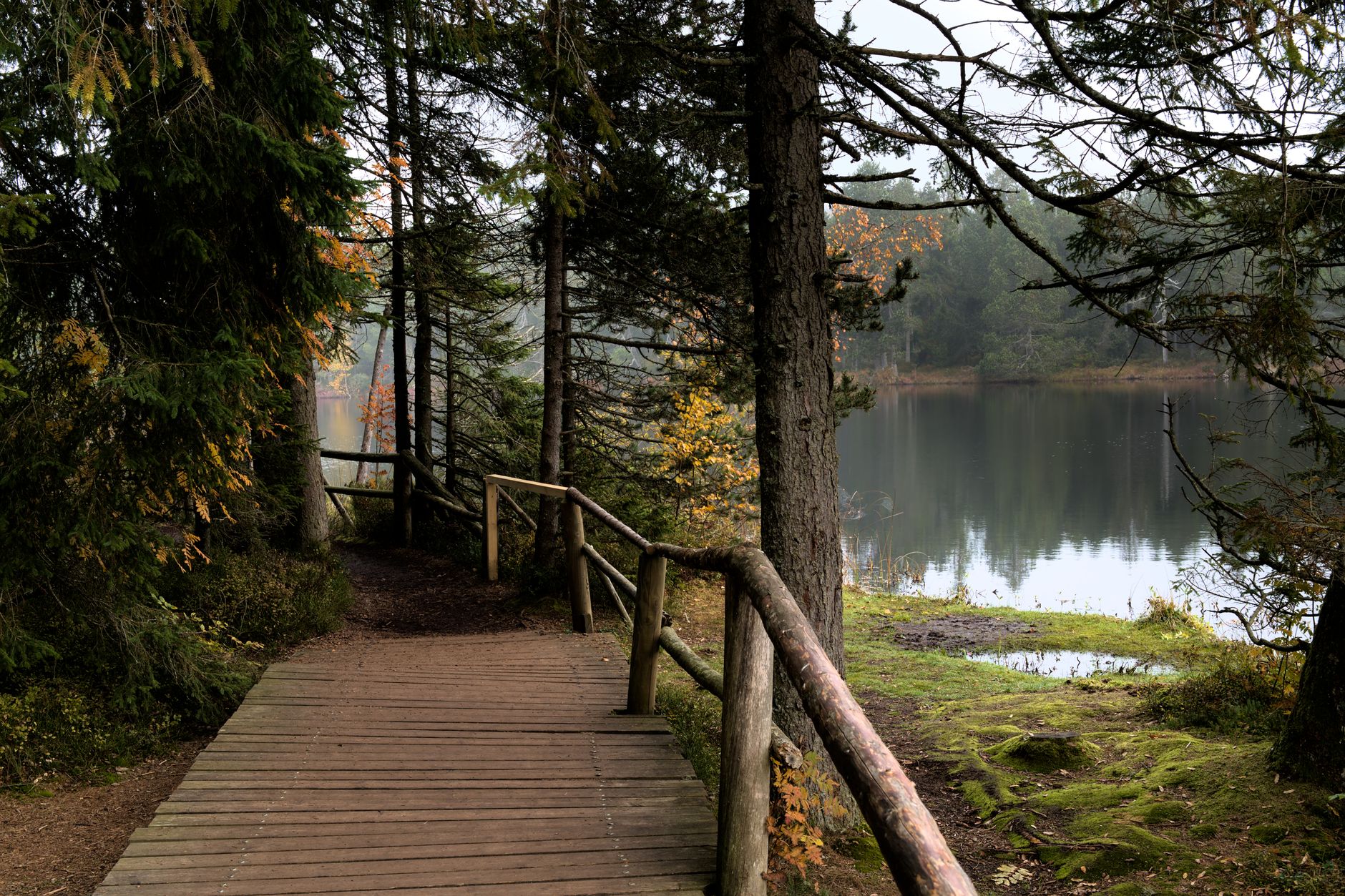
Springfield's flagship park sits on the east side of town on Wilks Road and covers about 200 acres of pond, walking trails, sports fields, and a solid playground. The paved loop around the main pond is a mile and change, well-lit, and the go-to evening walk for locals. There's a fishing pier, a pavilion for picnics, and enough parking that even Saturday morning doesn’t stress it. Free, open dawn to dusk.
Give it an hour for a walk, half a day if you’re bringing kids and a picnic. It's not wilderness — this is a groomed municipal park, not a state forest — but it is genuinely well-maintained and legitimately pleasant, which is more than most towns this size manage. Ranked first because it's in Springfield, it's free, it works year-round, and it's honestly the answer to 'where should we go for an hour before dinner' more often than any of the wilder options below. Sometimes the boring pick is the right pick.
Port Royal is 25 minutes west of Springfield on the Red River and preserves the site of a 19th-century river town. The park is small — under 30 acres — but the setting is remarkable: a wide bend in the river, big sycamores along the water, a reconstructed covered bridge, and a short interpretive trail. Free, day-use only. The picnic tables under the trees along the water are the best in the county.
Give it 90 minutes for the trail and a picnic, longer if you want to fish or wade. The water is shallow and rocky enough for kids in summer. The catch: facilities are minimal — pit toilets, no drinking water beyond a fountain, no snack bar — so bring what you need. Ranked second because it delivers a wilder experience than J. Travis Price and the river setting is genuinely special, but the drive and the thin facilities pull it down for casual visits.
Cross Creeks sits about 45 minutes northwest of Springfield toward Dover, and it's a serious wildlife refuge — 8,800 acres of bottomland, impoundments, and forest managed for migratory birds. Bald eagles winter here in genuine numbers, sandhill cranes stage through in fall, and the auto tour route lets you cover a lot of ground without leaving the car. Free, open dawn to dusk.
Come November through February for peak birds. Bring binoculars — a pair for 40 dollars will change what you can see — and plan two hours minimum for the auto route. Winter mornings around 8am are the sweet spot. The catch is the drive and the fact that outside winter migration the refuge is quieter and less spectacular. Ranked third because at its peak it's better than anything else in the region for wildlife, but for half the year it's a more ordinary experience.
Dunbar Cave is 35 minutes northwest in Clarksville and combines a real cave with 144 acres of walking trails around a small lake. The cave tours run seasonally — usually May through August — and cost around 10 dollars for a 90-minute guided walk that gets into serious cave passages with prehistoric Mississippian rock art. Book in advance; they sell out. The above-ground trails are free and open year-round.
Give it half a day if you’re doing the cave tour, an hour or two if you’re just walking the trails. The lake loop is easy and shaded, good for a hot afternoon. The catch is that the drive to Clarksville stretches the '30 minutes from Springfield' definition, and the cave tours are seasonal and require planning. Ranked fourth because the cave itself is genuinely worthwhile but the effort to access it — booking, timing, driving — pushes it below the more casual options.
Cheatham WMA covers 20,000 acres of bluffs, ridges, and river bottom along the Cumberland southwest of Ashland City, and it's the closest thing to real wilderness within 45 minutes of Springfield. The Bicentennial Trail runs the northern edge, and there are several unmarked hunter and forest roads that make for genuinely quiet walks outside hunting season. Free.
This is not a groomed park with kiosks and paved paths. It's a working game land, which means fall and spring hunting seasons close portions to casual visitors, and the trail signage is minimal. Wear orange October through January. In summer and late spring it's excellent — quiet, wooded, with real ridge views to the Cumberland. Ranked fifth because it's the wildest option but requires the most planning and the least casual to enjoy. Bring water, a map, and check the WMA calendar before you go.
Owens-Bell Park is a smaller Springfield city park on the north side of town with a paved walking loop, playground, and pavilion. It's not the equal of J. Travis Price but it's closer to downtown and less busy, and the connecting greenway offers a few extra miles of paved trail if you want distance. Free, open dawn to dusk.
Give it 30 to 45 minutes. The main reason it makes the list is convenience — if you’re staying downtown and want a morning walk without driving, this is the answer, and the greenway extension pushes it toward being an honest three-mile out-and-back. Ranked sixth because it's the least ambitious pick on the list, but for the right use case — a hotel walk, a stroller loop, a phone-call pace — it's the most practical answer. Skip it only if you’re already going to J. Travis Price.
Summer here is hot and humid: 90 degrees, 80 percent humidity by 10am. Morning walks before 9am or evening walks after 6pm are the workable windows June through August. Bring water — none of these have reliable refill stations except J. Travis Price and Owens-Bell. Bug spray is essential for Port Royal and Cheatham; ticks are real April through October. Wear closed shoes for anything off pavement.
Best months overall are April through mid-May and mid-September through early November. Spring wildflowers peak in April at Port Royal and Cheatham. Fall colour peaks around the third week of October across all six sites. Winter is honestly excellent for the wildlife refuge and surprisingly good for the trails once the leaves are down — you can see ridge structures and river bends that summer green hides. Pack a jacket and go anyway.
J. Travis Price for the playground, paved loop, and easy parking. Port Royal for a picnic-and-wade day when the weather is warm. Skip Cheatham WMA with small kids — no facilities and unmarked trails — and save Dunbar Cave for kids old enough to handle the tour (about six and up).
Not officially at any of these. Wading is fine at Port Royal in the Red River in summer where the water is shallow, and locals do it, but there are no lifeguards and no designated swim area. For actual swimming, drive to Cedars of Lebanon State Park east of Nashville, about 90 minutes.
Yes at all six on leash. J. Travis Price and Owens-Bell are the most dog-oriented with waste stations along the loops. Cheatham WMA is fine off-leash where you’re not near other users, but during hunting seasons keep the dog leashed and on trail. Port Royal is stroller-and-dog friendly on the main path.
Every booking through Springfield Destinations funds one verified tonne of carbon removal — same room, same price, no markup.
Find a stay