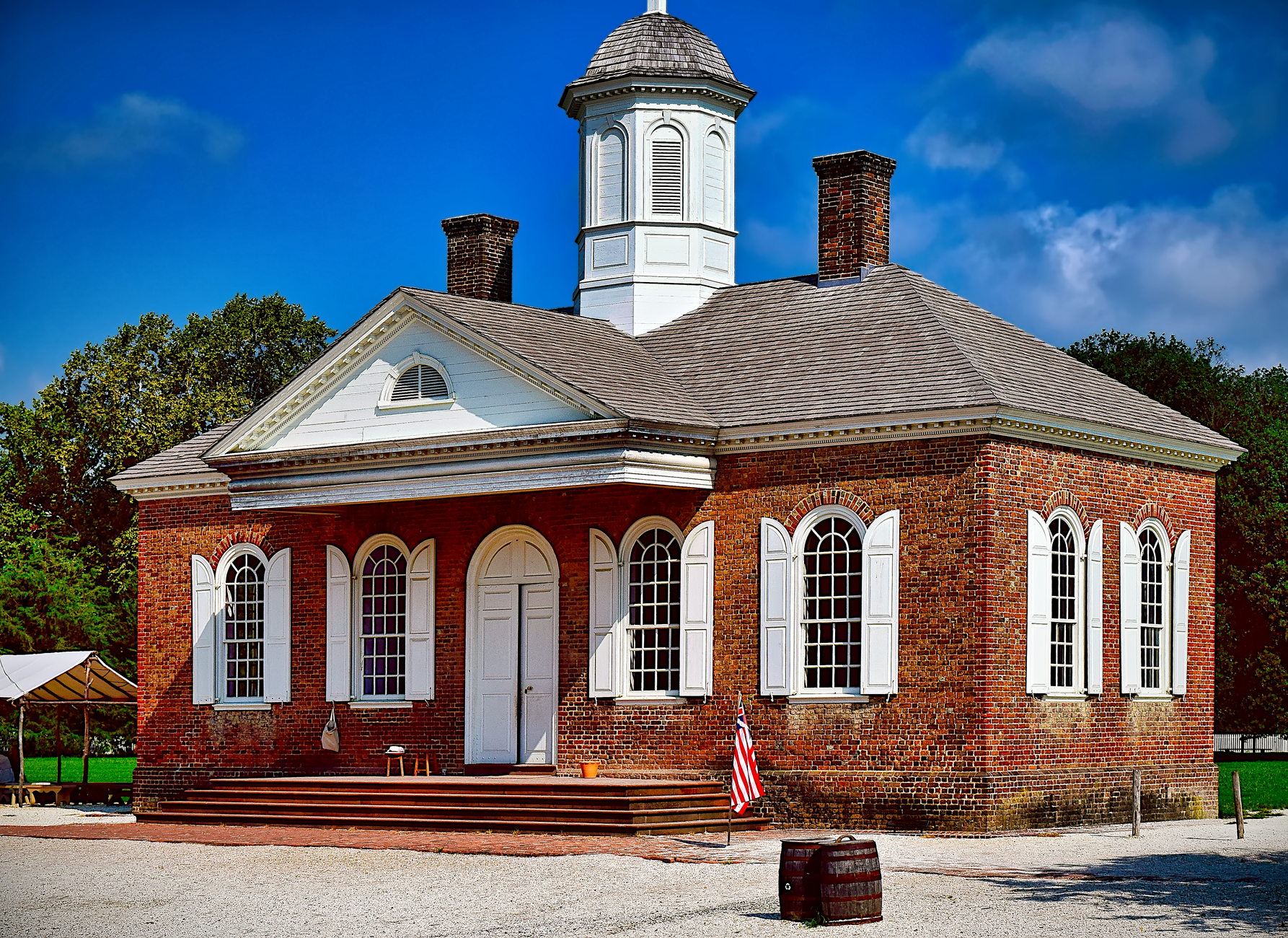
The 1879 courthouse on the Springfield square is the anchor. Red brick, cupola, still a working courthouse — you can walk in during business hours, admire the interior woodwork, and sit through five minutes of general sessions court if you want to see local government at work. The square itself is a full ring of 19th-century commercial buildings; the pharmacy on the northeast corner, the old bank on the west side, and the row of storefronts have been continuously occupied since the 1880s.
This ranks first because the square is the only place in the county where you can stand in one spot and see the town's entire commercial history at 360 degrees. Walk it slowly — 20 minutes for a full loop with stops — and look for the ghost signs on the upper brick walls where old business names still show. Farmers' market on Saturday mornings, May through October, brings the square alive.
The Bell Witch story is Robertson County's most famous export, and the site in Adams — the cave, the log cabin replica, and the family cemetery — is where it happened. The cave tour ($18) is the paid attraction and worth it for the guides, but the walking tour of Adams itself is free and rewarding. The old Bell Schoolhouse (1911) is now a museum with $5 admission, open Saturdays April through October, and it holds the original artifacts.
This ranks second because it is the county's most-visited history stop and it earns it: the story is real, the site is authentic, and the interpretation is handled by locals who take it seriously without turning it into a haunted-house gimmick. Plan two hours. Combine with lunch at the Bell Witch Café next door and you have a full half-day out of Springfield.
Port Royal, on the Red River between Adams and Clarksville, is a Trail of Tears interpretive site. The Cherokee removal of 1838-39 passed directly through here, and the signage does not soften what that meant. The old town of Port Royal was a river port and stagecoach stop in the early 1800s; the covered bridge replica stands where the original bridge crossed the Red River. Admission is free, park is open dawn to dusk.
This ranks third because the historical weight is enormous but the on-site infrastructure is small — you get interpretive panels, a walking trail, and the river. There is no visitor center staffed reliably. Come with the reading done, or with the state parks app open on your phone. The 1.5-mile trail loop takes 40 minutes and gives you the river, the bridge site, and a quiet section of hardwood bottomland.
Wessyngton, north of Cedar Hill, was one of the largest tobacco plantations in the antebellum South and one of the largest slaveholding operations in Tennessee. The main house is private and not open to visitors, but the historical marker on Highway 49 and the small enslaved-persons cemetery — signposted from the road — are accessible. John Baker's 2009 book The Washingtons of Wessyngton Plantation is the definitive account and worth reading before you go.
This ranks fourth despite the limited on-site access because it is genuinely important history, honestly told through the marker and the cemetery. Twenty minutes on foot. Bring the book or the summary printed out; the marker text alone does not carry the story. Do not attempt to visit the private house or drive up the private lane; the cemetery is the appropriate stop and it is meaningful.
The residential streets around the Springfield square — 5th Avenue, 6th Avenue, Church Street, Willow Street — hold the finest concentration of 19th and early 20th-century homes in Robertson County. The Springfield-Robertson County Museum on 5th Avenue publishes a printed walking-tour brochure (available at the museum or the visitors' center) that keys 30-plus houses to a foldout map. Free to use, self-paced, about 90 minutes at a strolling walk.
This ranks fifth because the houses are private residences and you cannot go inside any of them; the tour is purely street-view architecture. Best done on a Saturday or Sunday morning when traffic is light. Late April is the sweet spot — dogwoods and redbuds in bloom, magnolias leafing out, and the homeowners have finished spring yard cleanup so the properties look their best.
On 5th Avenue near the square, the museum is small — three rooms — but the collection is deep on tobacco, the Bell Witch, local Civil War history, and Robertson County families. Open Tuesday through Saturday, 10 a.m. to 4 p.m., admission $5. The tobacco exhibit is the standout: dark-fired tobacco production made Robertson County wealthy in the late 19th century, and the tools, photographs and price ledgers on display tell that story clearly.
This ranks sixth because the museum is genuinely useful but the interpretation depends heavily on whichever volunteer is on shift. On a good day you get a 20-minute conversation with someone whose grandfather grew tobacco; on a slow day you get a self-guided walk-through. Call ahead (the number is on the door) and ask if any of the long-time volunteers are working. Worth pairing with the courthouse square walk.
Robertson County has the highest concentration of surviving dark-fired tobacco barns in the United States, and driving to see them is a legitimate history activity. The barns — long, low, black-tarred structures with vertical siding and hinged ventilation panels — are still used every fall for the traditional slow-smoke curing process. Highways 49, 41 and the smaller roads through Cedar Hill and Adams hold dozens of them.
This ranks last because it requires you to know what you’re looking at — a random driver sees old barns, an informed driver sees a specific 200-year-old agricultural technology. Read the Wikipedia entry on dark-fired tobacco before you drive, or stop at the county museum first for context. October and November are the active curing months; you may see smoke rising from the ventilation panels, which is the entire point of the design.
The courthouse square, the Springfield museum, and the exterior of the Adams historic district are all wheelchair-accessible with reasonable sidewalks. The Bell Witch Cave is not — it involves stairs and uneven ground inside the cave. Port Royal has a paved parking area but the trail is packed gravel and hilly in places.
Start on the Springfield square at 9 a.m., 45 minutes at the courthouse and museum. Drive to Adams for Bell Witch Cave at 11 a.m., lunch at the café after. Drive to Port Royal at 2 p.m. for the trail and river. Back in Springfield by 4:30 p.m. Full county-history day for about $30 per person.
The courthouse square is always accessible outdoors. The Springfield museum stays open Tuesday-Saturday year-round. The Bell Witch Cave closes November through March. Port Royal stays open but has no facilities beyond restrooms. The Adams schoolhouse museum is closed November through March.
Every booking through Springfield Destinations funds one verified tonne of carbon removal — same room, same price, no markup.
Find a stay